Booth sales come from three things: the right people showing up, a conversation that ends in a clear next step, and a follow-up that starts within days. Exhibitors who capture every visit in one record, with a qualifying question attached, close more of what they pay to attract. Organizers who sell booth space the same way fill their floor plan faster.
This guide covers both sides of the keyword. Exhibitors get the routine for selling from a booth. Organizers get a simple way to sell the booths themselves. rsvpBOOK has supported event organizers since 2004, and its lead retrieval, booth giveaway and interactive booth map tools are built around this exact workflow.
TL;DR
- Most booth visits are planned before the show, so sell before the doors open: build a target list and invite it.
- Open with a question, not a pitch, and end every good conversation with one clear next action.
- Capture more than a badge scan: add a qualifying note, then rank leads hot, warm or cool the same day.
- Set a lead goal from your staffing hours and budget, then measure cost per lead and revenue over 12 to 18 months.
- Organizers can sell booths online from an interactive map and give exhibitors lead retrieval and giveaway tools in the same event record.
Table of Contents
- Two meanings of “booth sales”
- Start selling before the show opens
- Win the first minute of the conversation
- Capture leads as part of the booth, not after it
- Use giveaways to create qualified conversations
- Set a lead goal and know your cost
- Follow up while the conversation is fresh
- Selling booths as an organizer
- One record for registration, booths and leads
- Our perspective
- FAQ
- Sources
Two meanings of “booth sales”
People search this phrase for two reasons.
Exhibitors want to know how to sell products or services from a booth: get the right visitors, talk to them well, and convert the conversation into revenue.
Organizers want to know how to sell booth space: show a floor plan, let exhibitors pick a spot, collect payment and keep everything tied to the event.
The exhibitor routine comes first, since it is what makes exhibitors renew and buy larger booths next year. Organizer tactics follow near the end.
Start selling before the show opens
Booth traffic is mostly planned. A selective attraction guide by trade show consultant Jefferson Davis cites industry figures that the average attendee visits 26 to 31 exhibitors, 76% arrive with an agenda of exhibitors to see, and fewer than 20% of exhibitors use targeted pre-show marketing. The same guide recommends putting 15% or more of the show budget into pre-show promotion.
In practice that means:
- Build a target list. Start with your customers, open opportunities and accounts you want. Add the names the organizer lets exhibitors reach.
- Write one reason to visit. Offer something specific: a demo slot, a product answer, a prize drawing. “Stop by booth 412” is not a reason.
- Reach people more than once. The guide suggests contacting prospects at least three times before the show, across more than one channel.
- Pick the right channel. In Freeman’s 2025 research, attendees were asked how they plan; the report is a good source of benchmarks for how your audience prepares.
If you are building outreach from scratch, these marketing mix examples show how product, price, place and promotion fit together, which helps when you write the offer behind your invitation.
A prize drawing or an Instant Prize Wheel spin gives people a concrete reason to walk over. We cover that below.
Win the first minute of the conversation
Booth staff decide how many visits turn into leads. Freeman’s 2025 Commerce Trends Report found that 93% of attendees say capable booth staff are extremely important, yet only 78% feel exhibitors deliver on it.
A simple opening routine works at any booth:
- Step forward and make eye contact. Do not wait behind the table.
- Say your first name and ask an open question. BoothMaven’s approach guide suggests asking within 30 seconds and avoiding requests like “Can I grab a moment of your time?”
- Listen first. Let the visitor describe the problem. Then connect one feature to what they said.
- Paraphrase what you heard. It shows you listened and gives you a clean note to log.
Where it goes wrong: a rehearsed feature spiel. Visitors who feel pitched at leave, and you never learn what they needed.
Ask for a clear next step
A conversation without a next step is not a lead. The APPA and Global Pet Expo staff workbook teaches a two-step ask. First check whether the product sounds worth a closer look. Then ask for the commitment: a call, a demo, a quote. If the visitor is fully engaged, you set the next step. If they are tentative, you work it out together.
Write the agreed step in the lead record before the visitor walks away.
Capture leads as part of the booth, not after it
A lead, as the CEIR industry insight report defines it, is anyone your staff interact with who needs follow-up that delivers measurable value. A badge scan alone does not tell you that.
The same report recommends capturing more than badge data, using the show’s lead retrieval system with custom qualifiers, and notes that fewer than 10% of exhibitors use customer qualifiers. That is an easy edge.
The gap shows up after the show too. A Skyline booth staffing guide reports that 82% of surveyed exhibitors say their lead retrieval is not connected to a CRM and 80% have no dedicated follow-up process.
With rsvpBOOK, exhibitor and organizer lead retrieval sits in the same record as registration and onsite activity, so booth interactions do not live in a separate spreadsheet. For a closer look at the choice between scanners and digital tools, read our comparison of badge scanners and digital lead capture or our guide to choosing a lead capture app.
What to record on every lead
- Name, company and role, with whether they influence or decide the purchase
- The problem they described, in their words
- Timeline and budget signals, if they offered them
- The agreed next step and who owns it
- A rank: hot, warm or cool
The purchasing role matters. Freeman’s 2025 data cited in its report says 32% of trade event attendees are final decision-makers and 68% have at least some influence, so a role field helps you separate buyers from researchers.
Use giveaways to create qualified conversations
A giveaway works when it brings the right visitors and gives staff a reason to ask questions. It fails when it attracts anyone with a free hand.
Two formats fit a busy aisle:
- Instant Prize Wheel. A visitor shares their details, spins and sees the result at once. It draws a crowd and keeps the line moving.
- Live Winner Drawing. Entries build through the show and the draw happens at a set time, which gives visitors a reason to return to your booth.
Both turn booth visits into captured, usable data. Standalone booth giveaway tools from rsvpBOOK start at $99 per event. Our guides cover how to choose booth giveaways that generate leads and giveaways that capture leads, and the Trade Show Prize Wheel article shows how a wheel works on the floor.
One rule: tie the prize to your offer. A drawing for something your ideal buyer wants brings more of them than a generic gadget.
Set a lead goal and know your cost
Without a number, you cannot tell whether the booth paid off. The Pittcon workbook on lead quality and conversion gives a worked example of Exhibit Interaction Capacity:
| Step | Example |
|---|---|
| Exhibit hours | 19 |
| Staff on the floor | 2 |
| Interactions per staffer per hour | 3 |
| Total interactions | 114 |
| Visitor-to-lead conversion | 25% |
| Lead goal | 28 |
The workbook also suggests about one staffer per 50 square feet. Use your own show data to adjust the conversion rate.
Budget with the full picture
GES’s budgeting guide says booth space averages $100 to $150 per square foot, so a 10’ x 10’ booth may run $10,000 to $15,000, and that industry surveys put total show costs at about three times the space cost. It suggests estimating budgets from past cost per square foot or cost per lead.
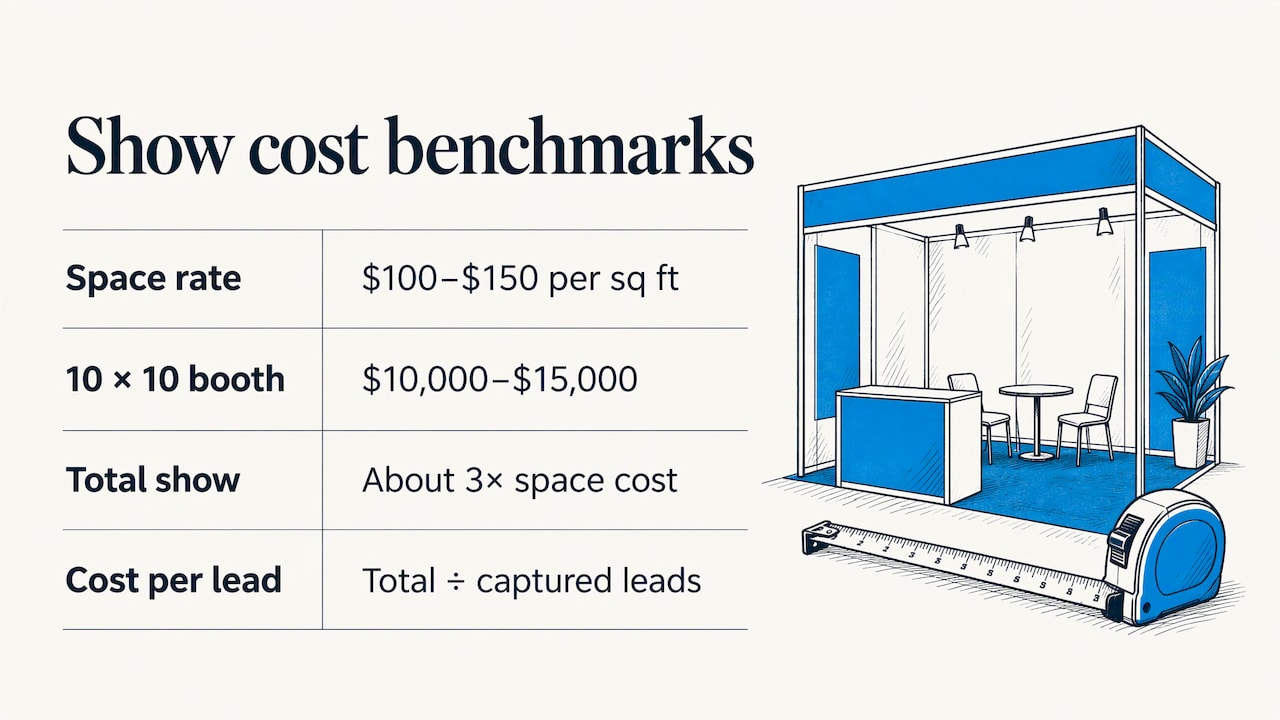
Divide your total by the leads you capture to get cost per lead. Then compare it with the revenue those leads produce.
Follow up while the conversation is fresh
This is where most booth sales are won or lost. The CEIR report recommends cc’ing recipients’ managers when routing leads and setting three firm post-show reporting dates in your CRM.
The Exhibitor’s Workbook from Harpeth Marketing offers a clear sort:
- Hot: a phone call within the first two days
- Warm: a thank-you note and a call within two weeks
- Cool: into the database for monthly emails
Cite something specific from the booth conversation in every message. That is why the note field matters on the floor.
The Pittcon workbook adds that fast responses improve conversion and that follow-up takes two attempts on average. Do not stop after one voicemail.
For a full plan, see our 30-day lead follow-up plan and our guide on what to do with trade show leads after the show.
Measure results for longer than a week
The Exhibitor’s Workbook recommends tracking each lead’s bids and revenue for 12 to 18 months after the event. Immediate measures include leads by rank, serious conversations and demos given. Long-term measures include pipeline and closed revenue. Report both.
Selling booths as an organizer
If you run the show, booth sales are your revenue line. Exhibitors want to see the floor, pick a spot and pay without a long email thread.
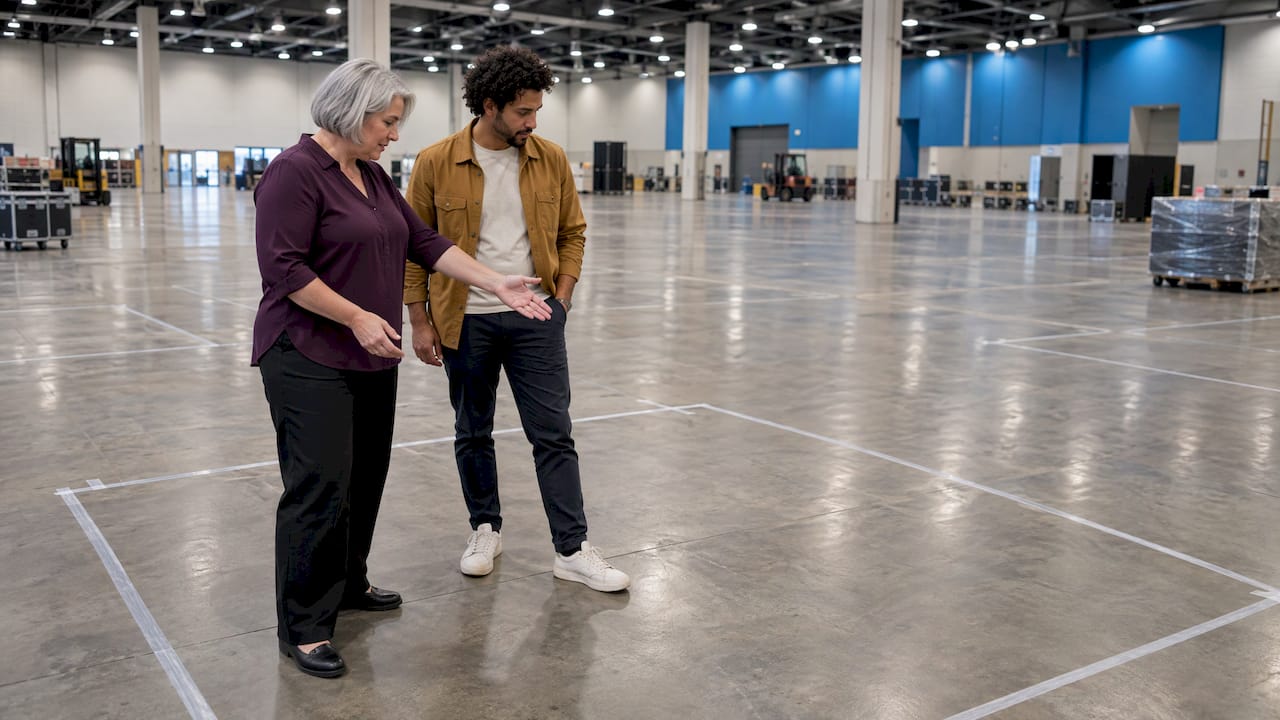
rsvpBOOK offers interactive booth maps with booth sales, so exhibitors choose a booth from a map and the sale connects to the event record. See interactive booth maps and other features.
A practical routine for organizers:
- Publish the floor plan early, with booth types and sizes clear.
- Let returning exhibitors choose first, then open the map to everyone else.
- Give exhibitors lead retrieval and prize tools so the show feels worth the investment.
- Report exhibitor scan activity after the show to support renewals.
Organizers also run attendee check-in. rsvpBOOK supports QR check-in, free on any smartphone, and Kiosk+ self check-in. Badge printing and check-in kiosk hardware are optional add-on rentals. One customer moved 2,600+ attendees through check-in with QR scanning.
Associations and nonprofits can use the same setup. Pair it with event registration to keep attendee, exhibitor and sponsor data together. rsvpBOOK offers discounted rates for nonprofits and government organizations.
One record for registration, booths and leads
rsvpBOOK is event management and registration software that connects every stage of an event in one record: registration, payments, sessions, onsite operations, exhibitor programs, engagement and reporting. It is a flexible alternative to enterprise event platforms, with self-service setup or hands-on implementation support when an event needs it.
Pricing is per registration, with additional module fees for services such as lead retrieval and giveaways. If your show needs attendee registration, booth sales and exhibitor lead capture, start with event management software from rsvpBOOK or review pricing and modules.
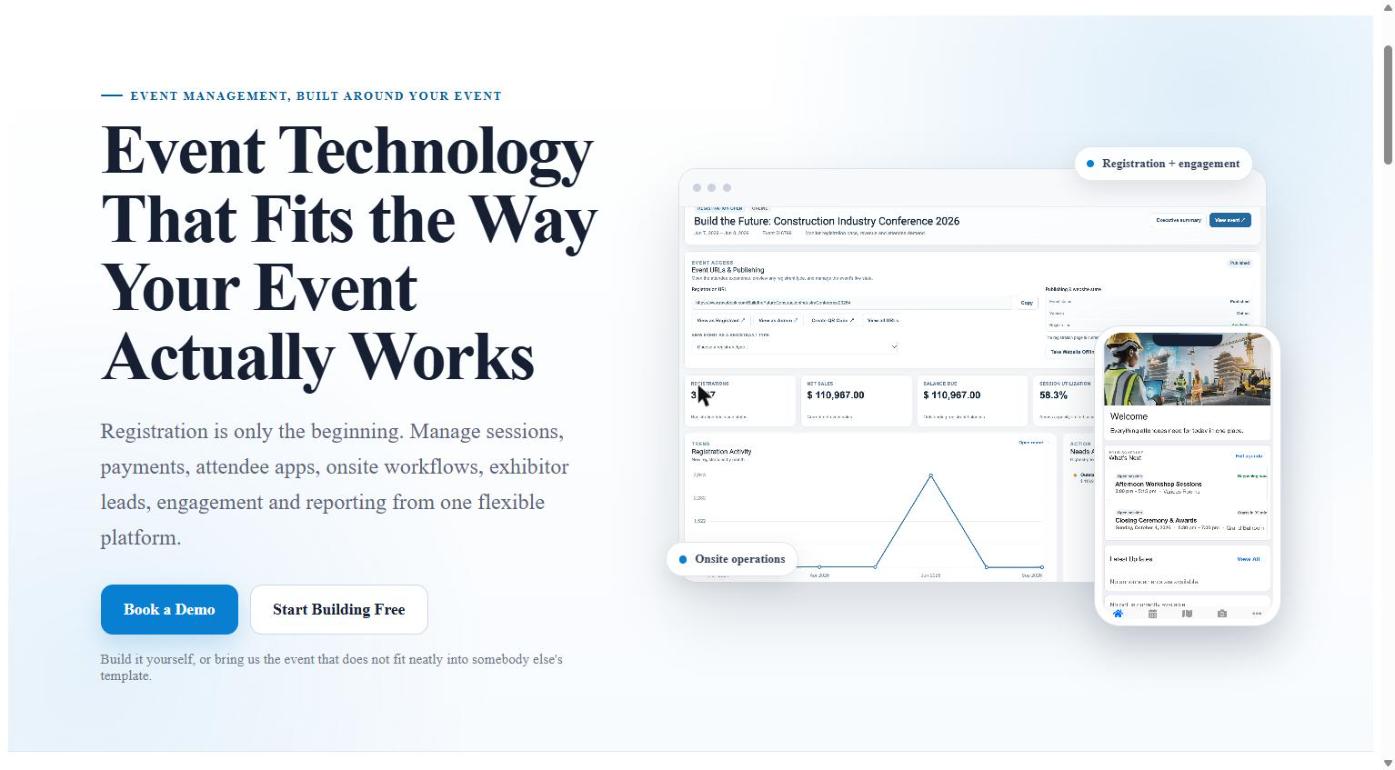
Booth giveaway tools start at $99 per event. Hardware, onsite staff and support are separate from pricing.
Our perspective
Booth sales are won by organization more than by flash. Exhibitors who walk in with a target list, a lead goal and a follow-up plan do better than those who rely on a good location.
We built rsvpBOOK so that the booth is not a separate system. Registration, booth maps, lead retrieval and giveaways live in one record. That means an organizer can show exhibitors real activity, and an exhibitor can see which conversations are worth a call.
Our advice for busy planners: start small, with one clear process for capturing leads and one prize mechanic. Add maps, kiosks or the mobile app when the event needs them. Our team can help with implementation when you want hands-on support.
Droshawn
FAQ
How do you make sales at a trade show booth?
Start before the show with a target list and a reason to visit. At the booth, ask open questions, link your offer to what the visitor says and agree on a next step. Rank every lead and follow up hot ones within two days.
How much does a trade show booth cost?
GES reports that space averages $100 to $150 per square foot, so a 10’ x 10’ booth may cost $10,000 to $15,000, with total show costs around three times the space price. Your show’s exhibitor prospectus has the real numbers.
What is the best way to capture leads at a booth?
Use a lead retrieval tool that records more than a scan: role, need, timeline and next step. Add a prize wheel or drawing to bring in visitors and collect their details with consent. rsvpBOOK offers lead retrieval and booth giveaway tools for this.
Can organizers sell booths online?
Yes. rsvpBOOK includes interactive booth maps with booth sales, so exhibitors pick and buy a space from a floor plan. The sale stays connected to registration and reporting.
Does rsvpBOOK have special pricing for nonprofits?
Yes. rsvpBOOK offers discounted rates for nonprofits and government organizations. Pricing is per registration, and you can ask our team for details.
Sources
- Selective Attraction, Jefferson Davis (AAOS exhibitor education)
- Freeman Commerce Trends Report 2025
- How to Approach Prospects at a Trade Show
- How to Make Your Booth Staff a Competitive Advantage workbook
- CEIR Industry Insight Report on lead quality
- Skyline booth staffing guide
- Pittcon lead quality and conversion workbook
- GES exhibitor budget planning guide
- The Exhibitor’s Workbook, Harpeth Marketing
Ready to run your next show with booth sales, lead retrieval and giveaways in one place? Book a demo or start building an event free.
Recommended
- Trade Show Lead Generation: A Practical Playbook for Exhibitors
- Trade Show Giveaways That Actually Capture Leads
- How to Choose Trade Show Booth Giveaways That Generate Leads
- What to Do With Trade Show Leads After the Show
Planning an event that doesn’t fit neatly into somebody else’s template? See how rsvpBOOK handles registration, onsite check-in, lead retrieval and engagement in one platform. Book a demo: https://www.rsvpbook.com/book-a-demo
